
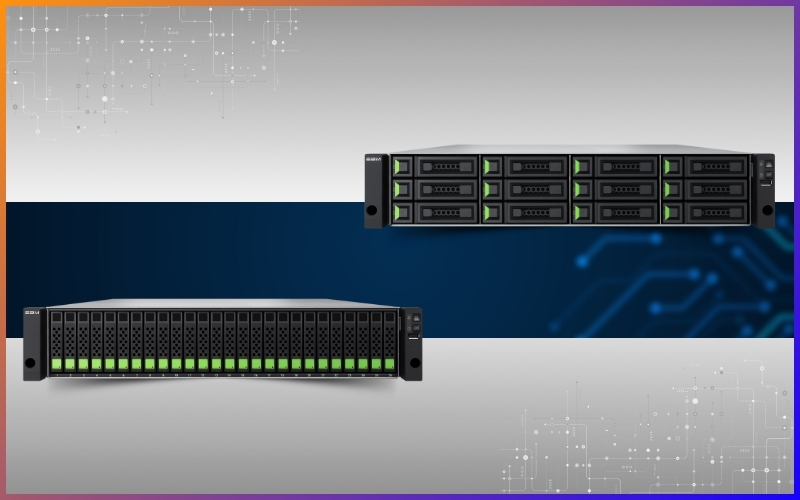
In today’s digital business environment, managing and protecting data has become more important than ever. Businesses of all sizes are constantly looking for reliable, secure, and scalable storage solutions to manage files, backups, applications, and critical business information. Two of the most popular options available today are NAS Storage and Cloud Storage Solutions.
But which one is better for businesses?
The answer depends on factors like security, scalability, accessibility, budget, performance, and business requirements. In this blog, we will compare NAS vs Cloud Storage in detail to help businesses choose the right data storage solution.
What is NAS Storage?
Network Attached Storage (NAS) is a dedicated file storage system connected to a network that allows multiple users and devices to access centralized data storage. A NAS Storage Server is commonly used in offices, enterprises, media production houses, surveillance systems, and small businesses.
Popular solutions like Synology NAS devices provide secure, scalable, and high-performance data management for organizations.
Key Features of NAS Storage
- Centralized file sharing
- Secure local data storage
- High-speed data access
- Backup and recovery solutions
- Multi-user collaboration
- Scalable storage expansion
- Remote access support
What is Cloud Storage?
Cloud Storage Solutions allow businesses to store data on remote servers managed by cloud service providers. Data can be accessed through the internet from anywhere in the world.
Cloud storage is widely used for:
- Remote collaboration
- Online backups
- Document sharing
- Business continuity
- Disaster recovery
NAS vs Cloud Storage Comparison
1. Data Security
NAS Storage
NAS provides businesses with full control over their data. Since the storage system is located within the organization, businesses can implement their own security policies, firewalls, encryption methods, and access controls.
This makes Secure NAS Storage an excellent option for companies handling sensitive or confidential data.
Cloud Storage
Cloud providers also offer strong security, but data is stored on third-party servers. Businesses relying completely on cloud infrastructure may face concerns related to data privacy, compliance, and unauthorized access.
Winner:
For businesses needing complete control and privacy, NAS Storage is often preferred.
2. Accessibility
NAS Storage
Modern NAS Systems provide remote access features, allowing employees to access files securely from different locations.
Cloud Storage
Cloud storage offers excellent accessibility since files are available anywhere with an internet connection.
Winner:
Cloud Storage has a slight advantage for global remote access.
3. Performance and Speed
NAS Storage
A NAS Storage Device connected to a high-speed local network delivers faster file transfer speeds compared to internet-based cloud storage.
This is especially useful for:
- Video editing
- Media production
- Surveillance storage
- Large file transfers
Cloud Storage
Cloud storage performance depends heavily on internet bandwidth and network stability.
Winner:
NAS Storage performs better for high-speed local operations.
4. Scalability
NAS Storage
Businesses can easily expand storage capacity by upgrading hard drives or adding expansion units.
Cloud Storage
Cloud platforms offer virtually unlimited scalability with flexible subscription plans.
Winner:
Cloud Storage provides easier scalability for rapidly growing businesses.
5. Cost Comparison
NAS Storage
NAS requires an initial hardware investment, but long-term operating costs are often lower.
Cloud Storage
Cloud solutions typically work on monthly or yearly subscription models, which may become expensive over time.
Winner:
For long-term storage needs, NAS Storage can be more cost-effective.
6. Backup and Disaster Recovery
Businesses often combine NAS Storage with Cloud Backup Solutions for maximum data protection.
This hybrid approach provides:
- Fast local access
- Secure cloud backup
- Business continuity
- Disaster recovery support
Which Businesses Should Choose NAS Storage?
NAS Storage is ideal for:
- Small and medium businesses
- Video production teams
- Surveillance systems
- Manufacturing companies
- Design agencies
- Enterprises managing large files
- Businesses requiring secure local storage
Which Businesses Should Choose Cloud Storage?
Cloud Storage is suitable for:
- Remote teams
- Startups
- Businesses with limited IT infrastructure
- Companies needing global access
- Organizations preferring subscription-based solutions
Hybrid Storage: The Best of Both Worlds
Many businesses now prefer Hybrid Storage Solutions that combine NAS Storage Servers with Cloud Storage Solutions.
Benefits include:
- Local high-speed access
- Remote collaboration
- Enhanced backup protection
- Better scalability
- Improved disaster recovery
Hybrid Enterprise Storage is becoming the future of modern data management.
Final Verdict
Both NAS Storage and Cloud Storage offer valuable benefits for businesses. The right choice depends on your company’s data usage, security requirements, scalability needs, and budget.
If your business needs high-speed local access, better control, and long-term cost savings, NAS Storage is a strong choice. If remote accessibility and flexibility are the main priorities, Cloud Storage Solutions may work better.
For many modern businesses, combining both through Hybrid Data Storage delivers the best performance, security, and scalability.
If you are looking for advanced Network Attached Storage Solutions, Enterprise Storage Solutions, or Synology NAS devices in India, EBM Technologies provides reliable storage infrastructure tailored for businesses of all sizes.